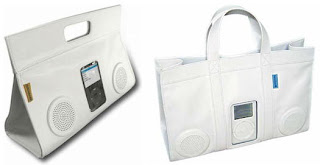
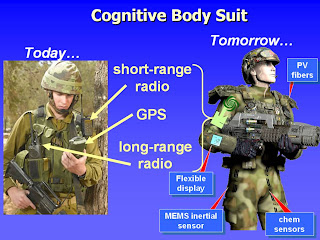
Or even a suit like this:
 We will personally send you a "Patchwerks" t-shirt. It's not that we don't want to see these types of applications -- we're just wondering who's driving the train here: the consumer or the good-idea fairy? Email Us!

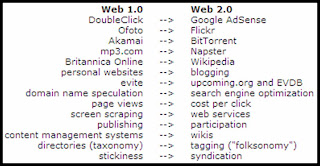 User-driven content. The notion of the web being a tool instead of a destination is what is driving the applications compiling Web 2.0. This idea is catching on in other areas of our lives to include our personal area network (PAN). Specifically, our PAN is the way we surround ourselves with devices to interact with various forms of media and information (phone, iPod, PDA, GPS, etc). For a while now companies have searched for ways to create a market out of this -- most recently there has been success in riding the iPod's coat-tails (via bags, jackets, etc.) This is incredibly hard to do because they've been thinking about the products as just that -- final products. What Eleksen is doing is providing a platform and a set of tools to configure your own PAN. For a good example, think of a high-end iPod jacket (~$500) vs. the Eleksen DIY kit (~$60 with all pieces).
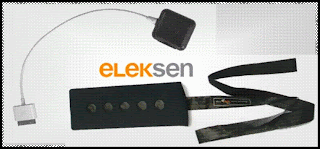 This distributes the integration cost out to the consumer while allowing the consumer to customize his/her own product. This creates a user-pull that wasn't available to companies in the past -- much the way open-architecture did for software companies.
 There are a handful of talks geared toward the state of the market (most notable Eleksen). I am hoping that the talks are not all fluff and that a good bit of insight can be drawn from the talks. Since one of the biggest challenges in moving away from discrete electronics lies in the processing and power, it would be great to see more talks on these subjects. Solicore will talk about flexible power sources

 However, in getting to talk to some of the companies it became clear that a lot still has to be done on the S&T side and manufacturability before the price points on these types of products can be lowered. Westcomb had a couple of iPod jackets with soft-shell configurations, but they were VERY expensive.
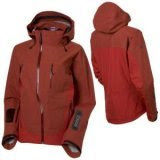 (upwards of $400!!...A more extensive review can be found here)
So here is my question: What will it take to bring down the price on these products? I'm thinking it isn't so much the electronics (although that is a big portion) as much it is the makeup of the garments they're integrated into (Gore, Event, etc) -- I believe the way the market stands now, only the high end pieces can absorb the added labor/materials involved in the electronics integration...

 However, having had first-hand experience with end-users, the acquisition process, and the DoD's overall beaurocracy I have a slightly more pessimistic view of the future direction for the technology. Mainly, I no longer believe that the military can be a market-driver for electrotextiles or smart-fabrics. Secondly, some of the proposed applications in my talk were extremely naive in hindsight (MANPACK and FFW kind of stuff).
 I am excited to see some of the newer products hitting the market and I am still extremely optimistic...but am I the only one? What's your take?
